
Microwave Maintenance — Cleaning, Lifespan Extension, Safety Tips
Microwave care: steam cleaning, door seal checks, turntable care, waveguide cover inspection, odour prevention, lifespan. Microwave repair in Riga — SATER.
Contents
A microwave oven is one of the most heavily used household appliances. It runs daily, sometimes several times, yet maintenance receives minimal attention. That's a mistake: proper care not only extends the appliance's life but also affects safety. A dirty microwave sparks, heats poorly, and can fail well before its time.
We repair microwaves from Samsung, LG, Panasonic, Bosch, Siemens, Whirlpool, Sharp, and other manufacturers. Many repairs could have been avoided with simple regular maintenance.
Step 1: Cleaning the Cavity (Steam Method)
Regular cavity cleaning is the single most important thing you can do for your microwave. Food residue on the walls and ceiling is heated by microwaves and can char, causing sparking and unpleasant odours.
Steam Method (Safest)
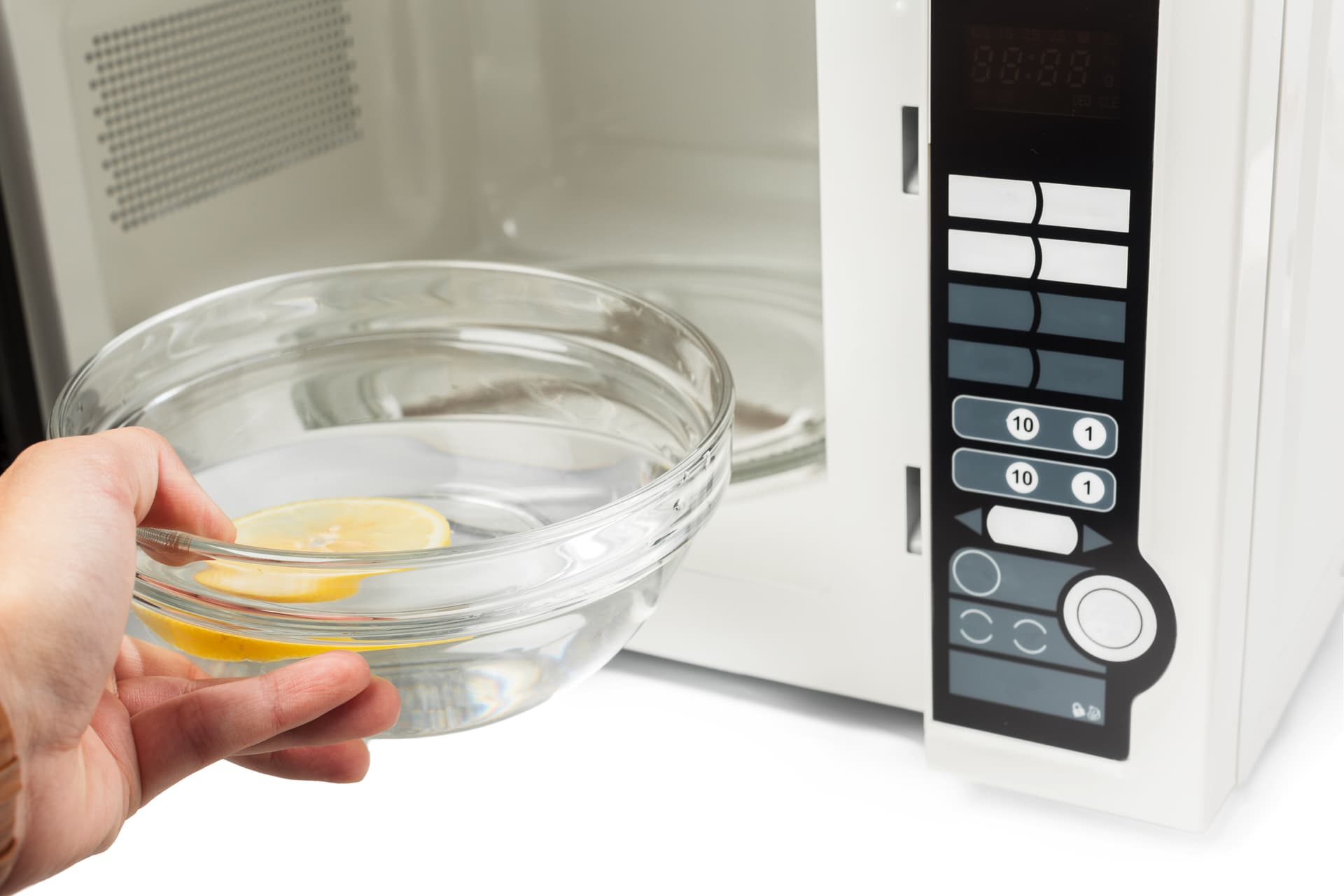
- Fill a microwave-safe bowl with 200–300 ml of water.
- Add 2 tablespoons of vinegar or the juice of half a lemon.
- Place the bowl in the microwave and run at full power for 5 minutes.
- Don't open the door for another 5 minutes after it stops — the steam will soften grease and dried residue.
- Remove the bowl (carefully — it's hot!).
- Wipe the walls, ceiling, and floor with a soft cloth or sponge. Softened deposits will come away effortlessly.
- Wipe dry.
What Not to Do
- Don't use abrasive sponges (the rough side of a washing-up sponge, steel wool). They scratch the cavity enamel.
- Don't use aggressive chemicals — solvents, bleach-based products, oven cleaners.
- Don't leave the cavity wet — wipe dry, especially around the waveguide cover.
Frequency
Weekly steam cleaning with active use. Wipe up spills immediately after they occur.
Step 2: Door Seal Maintenance
The door seal prevents microwave radiation leakage. A damaged or dirty seal can allow radiation through and reduce heating efficiency.
Wipe the seal with a soft cloth dampened in warm soapy water. Pay attention to corners and folds. Look for cracks, tears, or deformation — if found, have it replaced at a service centre. The door must close firmly without gaps.
Step 3: Turntable
Remove the glass turntable and roller ring. Wash in warm soapy water (the plate is dishwasher-safe). Clean the rollers and spindle — accumulated grease and crumbs impede rotation. Clean the cavity floor beneath the turntable.
Step 4: Waveguide Cover Inspection
The waveguide cover (mica plate) is a small panel on the interior wall (usually right or top). It passes microwaves from the magnetron into the cavity whilst protecting the waveguide from grease and steam.
Inspect it: it should be clean, free of stains, without charred areas. If it has darkened, has brown or black spots, has swollen, or burnt through — it needs replacing. A damaged cover is the main cause of sparking inside a microwave.
Step 5: Ventilation and Exterior
Ensure ventilation openings (usually rear and sides) are clear. Blocked ventilation causes overheating. Maintain at least 5 cm clearance at the sides and top, 10 cm at the rear.
Step 6: Preventing Odours
- Use a cover. A microwave cover or an inverted plate prevents splatter.
- Wipe spills immediately.
- Don't reheat fish at full power. Use 50–70% — fish heats more evenly and won't "explode."
To remove odours: steam clean with lemon or vinegar, leave a bowl of bicarbonate of soda overnight, or place activated charcoal inside for a few hours.
Step 7: What Never to Do with a Microwave
Never run it empty
Microwaves must be absorbed by food (water). Without a load, they reflect back into the magnetron and damage it. A few minutes of empty operation can destroy the most expensive component.
No metal
Metal cookware, foil, gold trim on plates — all cause sparking.
Don't block ventilation
Don't install the microwave in a sealed niche without clearance.
Typical Lifespan
An average microwave is designed for 8–10 years of use — roughly 2,000 magnetron hours.
What Fails
- Magnetron: 5–10 years. Power loss means food takes longer to heat.
- Waveguide cover: 3–7 years. Consumable, inexpensive to replace.
- Door latch and microswitches: 5–8 years.
- Turntable mechanism: 5–10 years.
- Control panel: 5–10 years.
Repair or Replace?
- Waveguide cover, latch, turntable motor replacement — repair.
- Failed magnetron in a microwave over 7–8 years old — usually cheaper to buy new. But for quality models (Panasonic, Sharp), magnetron replacement can be justified.
Microwave Repair at SATER
Important: don't attempt to repair a microwave yourself. Inside is a high-voltage capacitor (2,000–4,000 V) that retains a lethal charge even after unplugging.
If a microwave sparks, hums unusually, smells burnt, or no longer heats, stop using it and have the high-voltage circuit checked before more parts fail.
Repair path
Where to go next if this fault is repairable
Related SATER service, brand and fault pages help you understand the repair route and get the device into the right diagnostic flow.
Frequently Asked Questions
Need professional repair?
SATER service centre — Silmaču iela 6, Riga
SATER service — home electronics & appliance repair in Riga