
Microwave Makes Noise but Doesn't Heat — Magnetron and High-Voltage Component Guide
Why your microwave hums and buzzes but doesn't heat food: magnetron, diode, capacitor, transformer failure. Diagnosis and repair in Riga.
Contents
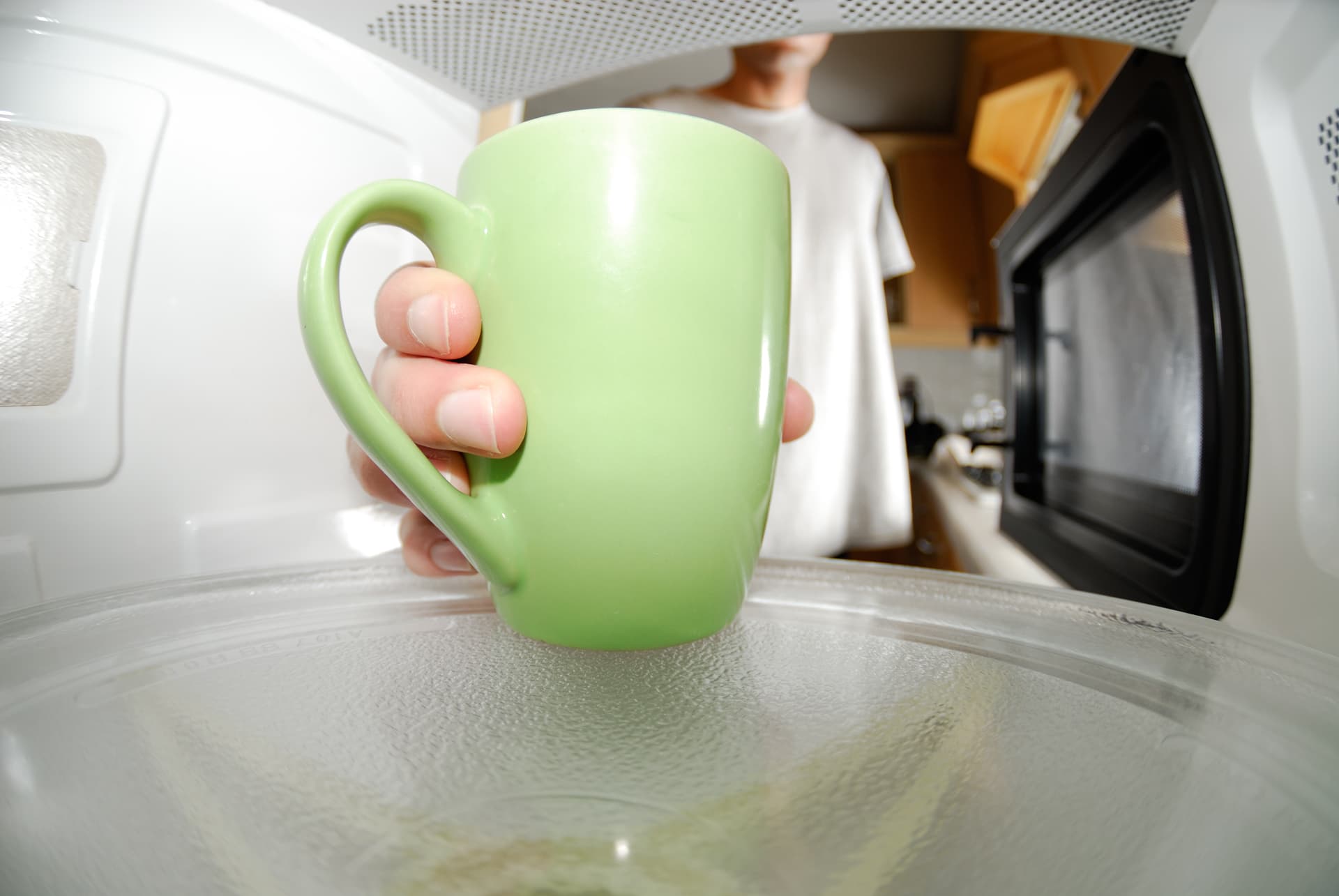
The microwave switches on, the turntable spins, the light comes on, the timer counts down — everything appears to be working. But after two minutes you take out your plate and discover the food is still cold. Meanwhile, you can hear a hum, a buzz, or an unusual noise coming from the appliance. Sound familiar?
If your microwave makes noise but doesn't heat, the problem almost certainly lies in the high-voltage circuit: the magnetron, diode, capacitor, or transformer. These are the most critical — and the most dangerous — components inside a microwave, and they're the focus of this guide.
⚠️ WARNING: LETHAL DANGER. The high-voltage circuit in a microwave oven operates at 4,000-5,000 volts. The capacitor stores a charge of up to 2,000 V and retains it for hours after the appliance is unplugged. Touching the capacitor or high-voltage diode terminals can cause instant death from cardiac arrest. NEVER disassemble a microwave yourself. This is not a computer or a vacuum cleaner — the voltages involved are lethal.
How the Microwave Heating System Works
To understand what's broken, it helps to know how the heating circuit is structured. It consists of four key components working in concert:
Transformer
Takes 220 V from the mains and steps it up to 2,000-2,500 V. It's a heavy, solid component — the most substantial part inside the microwave.
High-Voltage Capacitor
Works in tandem with the diode to double the transformer's output voltage. The result: approximately 4,000-5,000 V. The capacitor stores energy and delivers it to the magnetron.
High-Voltage Diode
Works alongside the capacitor to achieve voltage doubling. It permits current flow in one direction only.
Magnetron
The heart of the microwave. It receives the high voltage and converts electrical energy into microwave radiation (at 2.45 GHz), which heats the food. The magnetron is a specially designed vacuum tube.
If any one of these four components fails, heating stops. But because the light, turntable, and timer run on separate circuits, the microwave appears to be "working."
Symptoms of Each Component Failure
Magnetron Failure
The magnetron is the most common reason a microwave stops heating. The average magnetron lifespan is 2,000-3,000 hours of active use (not total time powered on, but actual heating time). For a typical household, that's 7-10 years of daily use.
How it fails:
- Cathode wear. The filament loses its emission capability — the magnetron stops generating microwaves.
- Vacuum loss. The tube loses its seal — air enters, and the magnetron ceases to function.
- Internal breakdown. An internal short circuit — usually accompanied by arcing, a smell, and popping sounds.
Symptoms:
- The microwave runs but food stays cold.
- A quiet hum (the normal operating sound) — but no heating.
- Occasionally — crackling, sparks inside the cavity, an ozone smell.
- If the magnetron has shorted internally — the microwave may cut out, and the fuse blows.
Sound character: with a worn magnetron, the microwave may run quieter than usual (the magnetron isn't drawing power), or hum louder than normal with noticeable vibration.
High-Voltage Diode Failure
The diode is one of the most vulnerable components. It operates under enormous voltages and currents and fails more often than the magnetron.
How it fails:
- Open circuit. The diode stops conducting. The capacitor doesn't charge, the magnetron receives no voltage.
- Short circuit. The diode shorts out — the capacitor discharges through the diode, and no voltage reaches the magnetron. This can blow the fuse.
Symptoms:
- Loud buzzing or humming — noticeably louder than normal.
- Food doesn't heat.
- The fuse may blow when heating mode engages.
- The transformer gets very hot (if the diode is shorted, the transformer is working under excessive load).
Sound character: if the diode has shorted, the microwave hums significantly louder than normal — the transformer is working under abnormal load. The sound is low, vibrating, sometimes "wailing."
High-Voltage Capacitor Failure
The capacitor is the most dangerous component in a microwave. It stores a charge of up to 2,000 V and can kill even hours after the appliance has been unplugged.
How it fails:
- Capacitance loss. The capacitor "dries out" — it can no longer store a sufficient charge. Voltage to the magnetron drops, and heating is weak or absent.
- Internal breakdown. An internal short circuit — the capacitor shorts out. Accompanied by a loud bang and a blown fuse.
- Leakage. Current "leaks" through damaged dielectric — heating is intermittent, sometimes works, sometimes doesn't.
Symptoms:
- The microwave heats weakly or not at all.
- A loud bang when switched on — capacitor breakdown.
- A burning smell inside the casing.
- The fuse blows when heating engages.
Sound character: during breakdown — a loud bang or snap. With capacitance loss — the microwave runs quieter than usual (the magnetron isn't receiving enough energy).
Transformer Failure
The transformer is the most durable of the high-voltage components, but it too can fail. This typically happens after many years of service or following a power surge.
How it fails:
- Inter-turn short circuit. The winding insulation breaks down — the transformer overheats, output voltage drops.
- Open winding. The winding wire burns through — the transformer stops working entirely.
- Breakdown to chassis. Insulation between the winding and the chassis is compromised — dangerous, as it can deliver a shock through the microwave's outer casing.
Symptoms:
- Loud humming and vibration — the transformer literally "shakes."
- A smell of burnt varnish or insulation.
- The transformer gets extremely hot (too hot to touch).
- The microwave may blow the fuse or trip the circuit breaker.
Sound character: with an inter-turn short — a very loud, intense hum with vibration. The sound is distinctly different from normal operation. If you hear an unusually loud hum — disconnect the microwave immediately.
What the Noise Tells You
Different sounds point to different faults:
Swipe to see the full table
Why You Must Not Repair the High-Voltage Circuit Yourself
We repeat this without apology, and not for dramatic effect. The high-voltage circuit in a microwave is not domestic 220 V. Voltages reach 4,000-5,000 V, and the capacitor can retain a charge of 2,000 V for hours — even days — after the appliance is unplugged.
For comparison:
- A domestic 220 V socket is dangerous but typically not fatal from brief contact.
- A microwave capacitor at 2,000 V means almost certain death. The current passes through the heart and causes fibrillation.
Even experienced electricians have suffered fatal injuries whilst repairing microwaves when they failed to discharge the capacitor beforehand. The internet is full of tutorials on "how to discharge a microwave capacitor" — and equally full of cases where those tutorials ended in tragedy.
Do not risk your life. Leave high-voltage component repair to professionals.
What You Can Check Before Visiting a Service Centre
There are a few safe checks that don't require opening the casing:
Water Cup Test
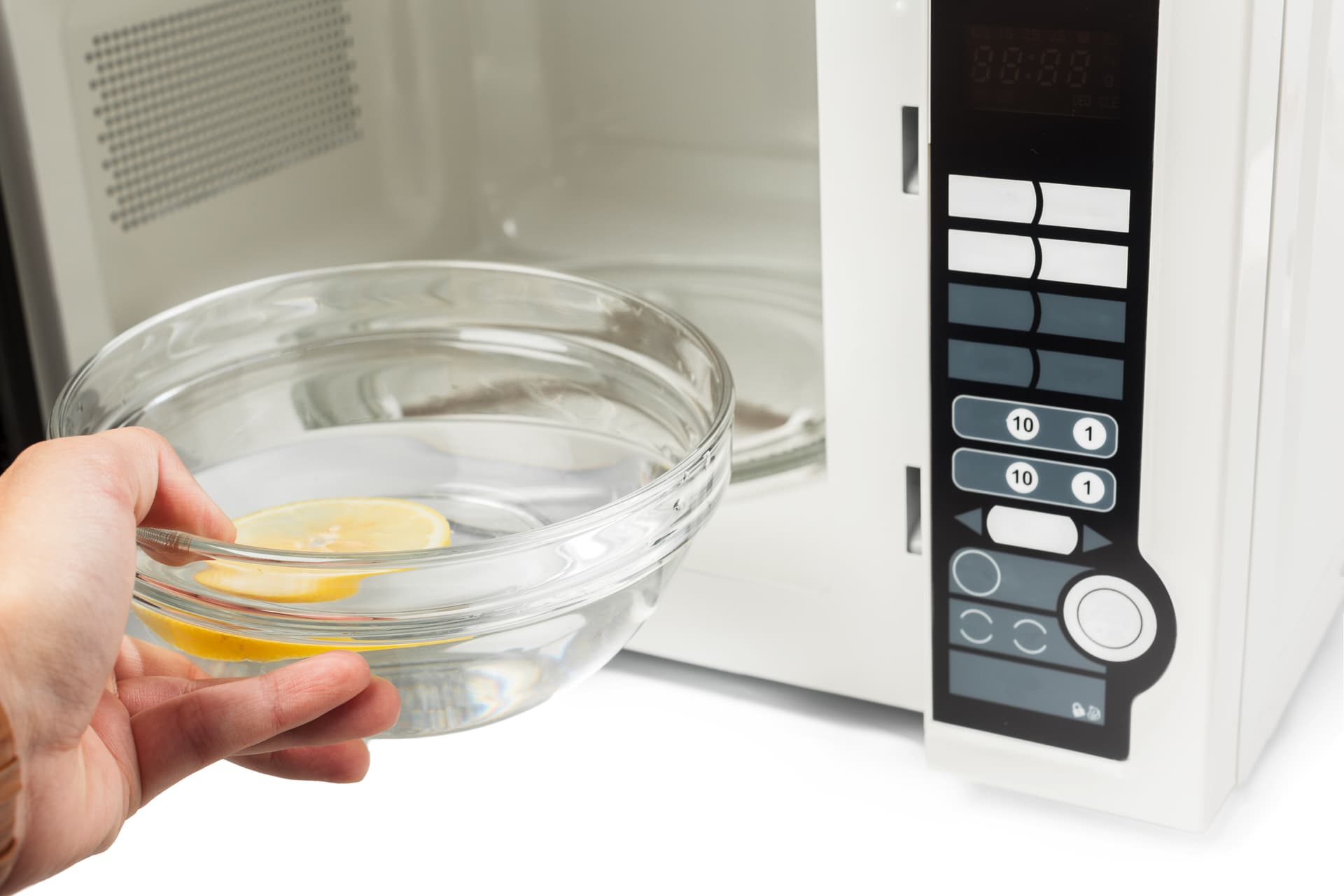
Pour 200-250 ml of water into a glass (at room temperature). Place it in the microwave and run at full power for 1 minute. Check the water temperature:
- Water is hot / warm — the microwave is heating, but weakly. A partial fault is possible (magnetron losing power, partial capacitor failure).
- Water remains at room temperature — heating is completely absent. One of the high-voltage components has failed.
Mica Waveguide Cover Check
Inside the microwave cavity (usually on the right wall) there's a mica waveguide cover — a thin grey or brown panel covering the waveguide opening. Inspect it:
- Are there burn marks, dark spots, or holes?
- Is it cracked or blistered?
A damaged mica cover is a common cause of arcing in the cavity. It doesn't directly prevent heating, but if the cover has burnt through, grease and moisture can enter the waveguide and damage the magnetron.
Socket and Power Check
Make sure the microwave is receiving full mains power. Plug a high-draw appliance (hairdryer, iron) into the same socket — if it runs at full power, the socket is fine.
Repair and Component Replacement Costs
High-voltage circuit repair is one of the more expensive microwave repairs. But in most cases, it remains economically worthwhile:
- Diode replacement — relatively inexpensive; the diode costs little, and the work is straightforward.
- Capacitor replacement — slightly more, but still good value.
- Magnetron replacement — substantially more expensive. The cost depends on the model and wattage. For budget microwaves, the magnetron price can approach the cost of a new unit — so do the maths.
- Transformer replacement — the most expensive repair. For budget models, it's usually not cost-effective.
We always quote exact prices after diagnosis — costs depend on the model, the faulty component, and parts availability. We'll tell you honestly if repair doesn't make financial sense.
Which Brands We Repair
The SATER service centre repairs microwave ovens from all major brands:
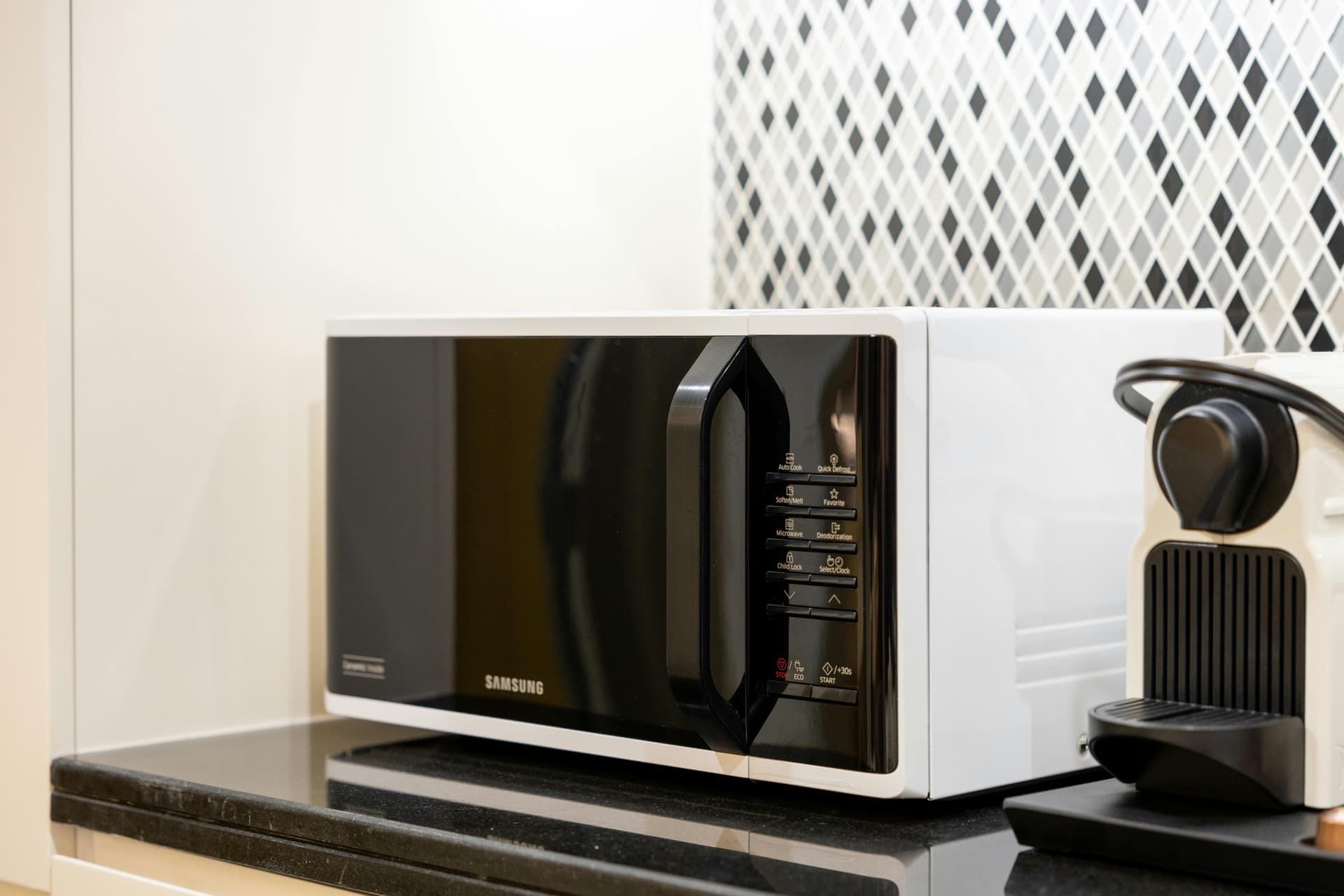
- Samsung — the most common in Latvia. Magnetrons typically fail after 5-8 years of active use.
- LG — reliable appliances with long-lasting magnetrons, but diodes and capacitors are the weak points.
- Panasonic — including models with inverter technology, which require specific diagnostic procedures.
- Bosch / Siemens — built-in models with a higher tendency for transformer overheating.
- Whirlpool — a typical problem: diode failure during power surges.
- Sharp, Gorenje, Beko, Candy — and other brands.
When Diagnosis Makes Sense
Noise without heat usually points to the microwave high-voltage circuit. We check the magnetron, diode, capacitor, transformer, fuses, wiring, and control output so the repair decision is based on the failed component, not on symptoms alone.
If the magnetron or transformer cost approaches the price of a new microwave, we say so before repair starts.
Repair path
Where to go next if this fault is repairable
Related SATER service, brand and fault pages help you understand the repair route and get the device into the right diagnostic flow.
Frequently Asked Questions
Need professional repair?
SATER service centre — Silmaču iela 6, Riga
SATER service — home electronics & appliance repair in Riga