
Why the Baltic Climate Is Tough on Your Electronics — Humidity and Temperature Swings
How Riga's climate damages electronics: 80%+ humidity, condensation, salt air, swings from -20°C to +30°C. Prevention and device protection in Latvia.

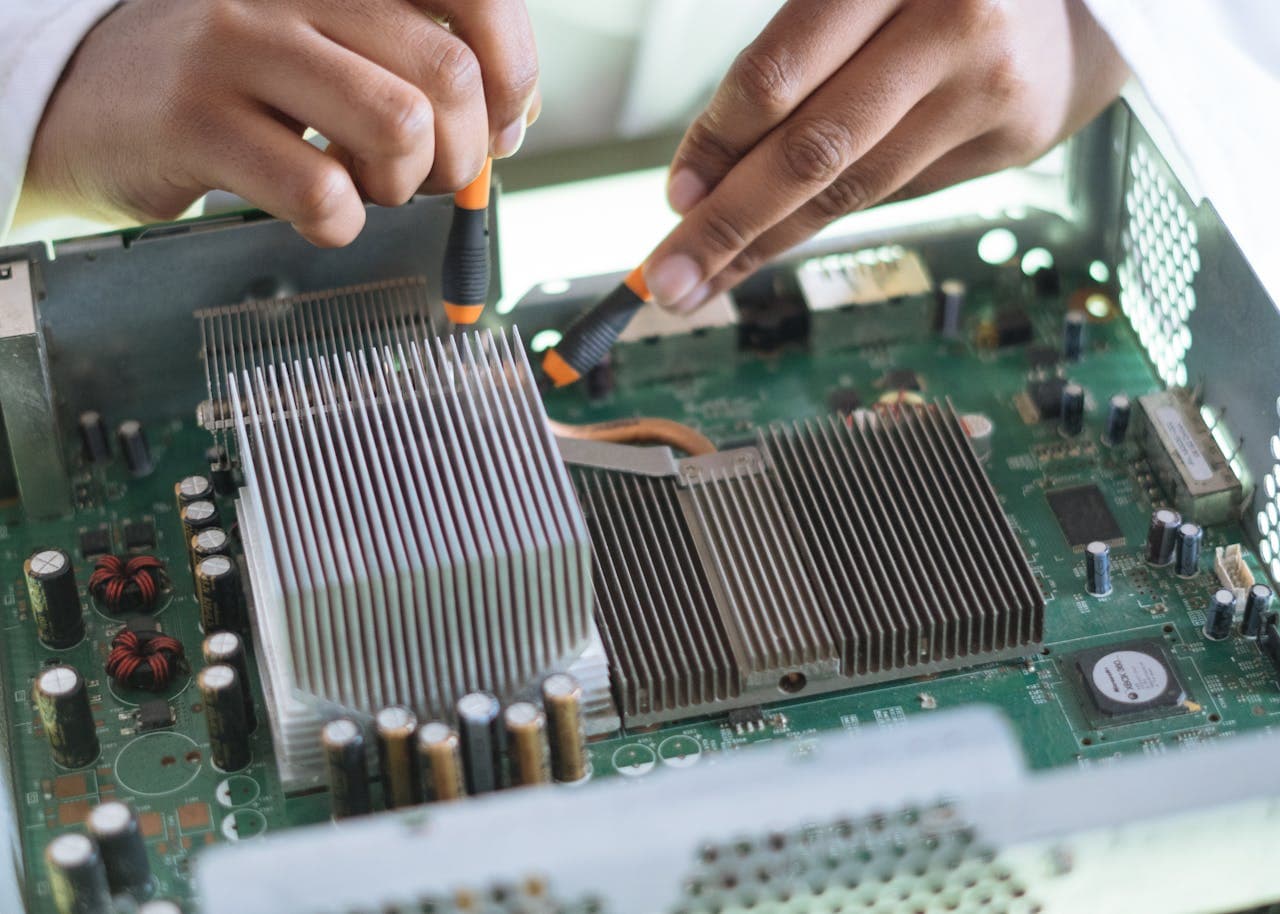
Bibhukalyan Acharya / Pexels
Contents
Riga sits on the shore of the Baltic Sea, at the mouth of the Daugava river where it meets the Gulf of Riga. It's beautiful — but for electronics, it means humidity that rarely drops below 70% for most of the year, and consistently stays above 80-85% during autumn and winter. Add marine air carrying salt micro-particles, temperature swings from -20°C in winter to +30°C in summer, and sharp transitions between cold and warm when entering a heated building.
All of this creates conditions in which electronics age and fail faster than in a dry continental climate. At the SATER service centre, we see the consequences of Riga's climate every day: oxidised contacts, green-tinged circuit boards, swollen capacitors, corroded connectors. This article explains exactly what the Baltic climate does to your devices — and how to fight back.
Humidity: Electronics' Greatest Enemy
The Numbers Worth Knowing
The average annual relative humidity in Riga is approximately 80%. For comparison: Madrid sits at 57%, Berlin at 72%, Moscow at 73%. Riga is one of the most humid cities in Northern Europe.
The monthly picture is even more telling:
- November-January: 85-90% (fog, drizzle, wet snow)
- March-April: 70-75% (melting snow, damp conditions)
- June-August: 70-75% (summer humidity, periodic rain)
- September-October: 80-85% (autumn rains, returning moisture)
The critical threshold for electronics is 60% relative humidity. Above this level, active corrosion of unprotected metal surfaces begins. In Riga, this threshold is exceeded virtually year-round.
How Moisture Enters Devices
Electronics aren't hermetically sealed. Ventilation slots in televisions, robot vacuum casings, gaps in microwaves — all are entry points for moist air. Moisture penetrates and settles on circuit boards, contacts, and connectors.
Particularly dangerous is condensation — moisture that forms during sudden temperature changes. Bring a cold laptop inside from the street into a warm room, and microscopic water droplets form on internal surfaces. If you switch the device on in that state, moisture can cause a short circuit.
What Moisture Does to Circuit Boards
- Electrochemical corrosion. Water with dissolved salts creates an electrolyte between traces on the circuit board. Under operating voltage, electrochemical migration begins — traces literally dissolve, copper migrates, and short circuits can result.
- Contact oxidation. Connectors, IC pins, and contact pads develop an oxide film. The result: unstable connections, intermittent glitches, signal loss.
- Dendrite growth. Between closely spaced conductors, metallic "trees" (dendrites) grow under the influence of moisture and voltage. They bridge traces and destroy ICs.
- Insulation degradation. Moisture reduces insulation resistance, potentially causing current leaks and breakdowns.
Marine Air: Salt and Corrosion
Riga is a port city. The Gulf of Riga lies 10-15 km from the centre, and Jūrmala (the coast) is 20-25 km away. Marine air carries sodium chloride micro-particles that wind distributes for dozens of kilometres.
Salt accelerates corrosion dramatically. Chloride ions destroy protective oxide films on metals, leaving them vulnerable to moisture. In coastal districts — Vecāki, Mežaparks, Bolderāja, Mangaļsala — electronics corrosion progresses noticeably faster than in the city centre.
Temperature Swings: -20°C in Winter, +30°C in Summer
The Winter Scenario
Latvian winters mean constant transitions through zero. Temperature can drop from +2°C to -15°C and back within a single day. Each such transition means condensation inside electronics.
Typical situation: you leave a robot vacuum in an unheated hallway or garage. Overnight the temperature falls to -5°C. In the morning you bring it into a warm flat (+22°C) — a 27-degree swing. Condensation instantly coats all internal surfaces.
The Heating Season: Dry Air and Static
In winter, central heating radiators dry the air to 20-30% humidity. Less moisture should be better for electronics, right? Not quite. Dry air creates conditions for static electricity build-up. Static discharge can damage sensitive ICs — particularly in thin electronics such as smartphones and SSDs.
The optimal humidity for electronics is 40-60%. In Riga, we're either above this range (most of the year) or below it (heating season indoors).
Preventative Measures
Humidity Control
- Hygrometer. Purchase a simple digital hygrometer (€5-15) and monitor indoor humidity. Above 65% — use a dehumidifier or ventilate more frequently.
- Dehumidifier. For flats with elevated humidity (ground floors, semi-basements, buildings without ventilation), a dehumidifier is a necessity, not a luxury.
- Silica gel packets. Don't discard the silica gel from shoe boxes and electronics packaging. Place them near seldom-used equipment. Silica gel absorbs excess moisture.
Ventilation
- Don't place electronics flush against the wall. Leave a 5-10 cm gap for air circulation.
- Don't block ventilation openings. Curtains, decorative panels, shelves — anything blocking ventilation impedes cooling and promotes moisture accumulation.
- Regular dust cleaning. Dust absorbs moisture and creates a corrosive environment. Wipe down electronics and clean ventilation grilles at least monthly.
Temperature Transitions
- Don't switch on electronics immediately after frost. If a device was in the cold (balcony, garage, car boot), allow 1-2 hours to warm to room temperature before powering on.
- Don't store electronics in unheated spaces. A garage, balcony, or summer house in winter represents extreme conditions for equipment.
Which Devices Humidity Kills First
From our experience at SATER, the most vulnerable devices are:
- Televisions (power supply units). Capacitors in power supplies are the first casualties. Swollen capacitors are the number one reason clients visit our service centre.
- Robot vacuums (charging contacts). Charging contacts on the robot's underside oxidise from moisture; the robot stops charging on the station.
- Audio equipment (potentiometers). Volume, balance, and tone controls — moisture causes crackling and contact loss.
- Microwaves (control panel). Cooking steam + high kitchen humidity = oxidised membrane keypad.
Repair path
Where to go next if this fault is repairable
Related SATER service, brand and fault pages help you understand the repair route and get the device into the right diagnostic flow.
Frequently Asked Questions
Need professional repair?
SATER service centre — Silmaču iela 6, Riga
SATER service — home electronics & appliance repair in Riga