
Voltage Problems in Older Riga Buildings and How They Damage Electronics
Old wiring in Soviet-era blocks and pre-war Riga buildings: voltage fluctuations and their effect on electronics. Surge protectors, stabilisers, damage signs.
Contents
Riga is a city with rich architectural history, and a significant portion of the housing stock consists of buildings constructed in an entirely different electrical era. Pre-war Art Nouveau buildings (1900s-1930s), Soviet-era Khrushchyovkas (1960s), Brezhnev-era blocks (1970s-80s) — all were designed for electrical loads that don't come close to modern demands.
The average flat in the 1970s consumed 1-2 kW: a fridge, a television, a couple of light bulbs, an iron. Today, the same flat houses a washing machine, dishwasher, microwave, powerful kettle, television, router, computer, chargers for various gadgets, and a robot vacuum. Total consumption: 5-10 kW. The wiring? Still the same aluminium, rated for 2 kW.
The result: unstable voltage, surges, sags, and consequently, electronics failures.
Old Wiring: Where the Problem Lies
Aluminium Instead of Copper
In Soviet-era buildings, wiring was done with 2.5 mm² aluminium cable. Aluminium has serious drawbacks:
- High resistance. Aluminium has 1.6 times higher specific resistance than copper — more losses, more heating, greater voltage drops under load.
- Brittleness. Over time, aluminium becomes brittle; wires snap when bent. Connections (twisted joints) loosen and oxidise.
- Contact oxidation. Aluminium quickly develops an oxide film with high resistance — heating at connection points, sparking, voltage losses.
Wire Cross-Section
Typical wire cross-section in a Khrushchyovka: 2.5 mm² aluminium. Maximum permissible load: approximately 3.5 kW. Switch on the kettle (2 kW) and microwave (1.5 kW) simultaneously and the wiring is at its limit.
No Earthing
Most Khrushchyovkas and Brezhnev-era blocks were built with a two-wire system (live + neutral, no earth). Euro-standard sockets with earth contacts were fitted during renovations, but the earth wire often "hangs in the air" — unconnected to any actual earthing circuit.
Types of Voltage Problems
Voltage Sag (Undervoltage)
Voltage drops below the norm (below 207 V against the 230 V ±10% standard). Occurs during high load on the line — evenings when all neighbours switch on appliances. Power supply units must work harder, accelerating wear.
Surges and Spikes
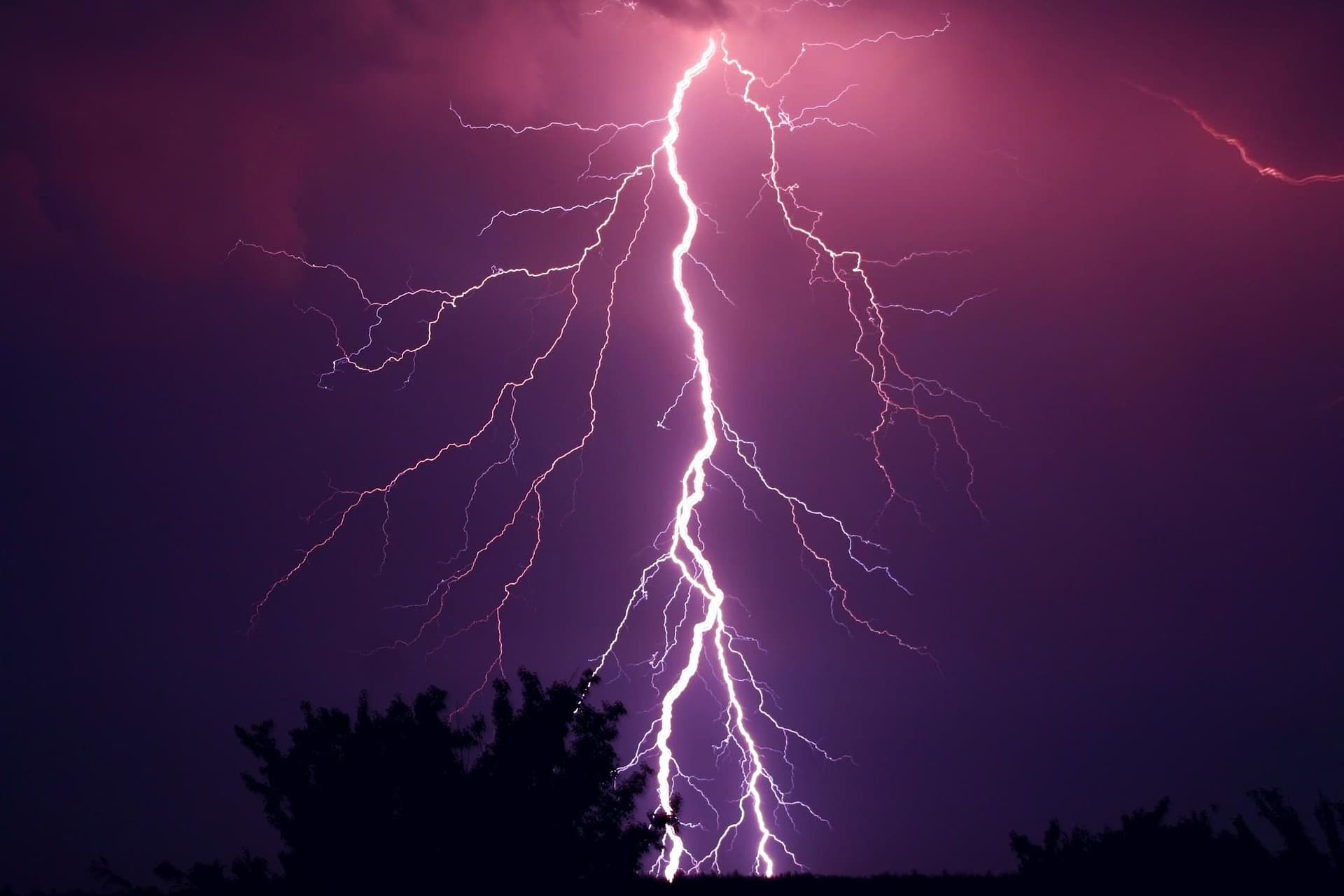
Brief voltage increases — from fractions of a second to several seconds. Amplitude can reach 400-1,000 V. Caused by lightning strikes (Riga experiences 15-20 thunderstorm days per year), switching of powerful loads in the building, and emergency power cuts. Results: blown capacitors and diodes, damaged control ICs, burnt input circuits.
Momentary Blackouts
Complete or partial loss of power for seconds or minutes. The moment power returns often carries a surge — this is where the main damage occurs.
Riga Districts Most Affected
- Centre (Vecrīga, Centrs): Pre-war buildings with 1930s-50s wiring. Overloaded substations.
- Khrushchyovkas (Iļģuciems, Imanta, Bolderāja, Purvciems, Pļavnieki): 1960s-70s aluminium wiring, two-wire system, small cross-section.
- Panel buildings (Ziepniekkalns, Kengarags, Jugla): 1970s-80s wiring — slightly better but still designed for another era.
Signs of Voltage Damage
- Screen flickering — brief dimming or flashing. The power supply can't cope with voltage sags.
- TV won't switch on after a thunderstorm — classic power supply damage from a surge.
- Swollen capacitors — capacitors with domed tops, often the result of unstable voltage.
- Burning smell — damaged power supply components can emit a characteristic odour.
- Relay clicking — if your stabiliser constantly clicks whilst switching modes, the voltage is fluctuating.
Protecting Your Electronics
Surge Protector (SPD)
The basic level of protection. A proper surge protector (not a cheap multi-socket with a switch) contains varistors and gas discharge tubes that absorb impulse surges.
Important: a surge protector does not protect against voltage sags and does not stabilise voltage.
Voltage Stabiliser
For chronic voltage sag issues, a stabiliser is a necessity. It maintains output at 220-230 V with input ranging from 140 to 270 V.
SATER and Voltage Problems
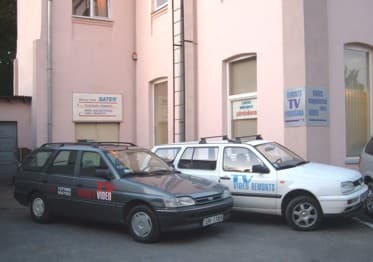
At the SATER service centre, we repair voltage-damaged electronics daily. The most common cases: replacing TV power supply units after surges, replacing swollen capacitors, repairing backlight inverters.
If several devices fail after the same surge or in the same room, bring the damaged equipment for diagnosis and have an electrician check the building wiring as well.
Repair path
Where to go next if this fault is repairable
Related SATER service, brand and fault pages help you understand the repair route and get the device into the right diagnostic flow.
Frequently Asked Questions
Need professional repair?
SATER service centre — Silmaču iela 6, Riga
SATER service — home electronics & appliance repair in Riga