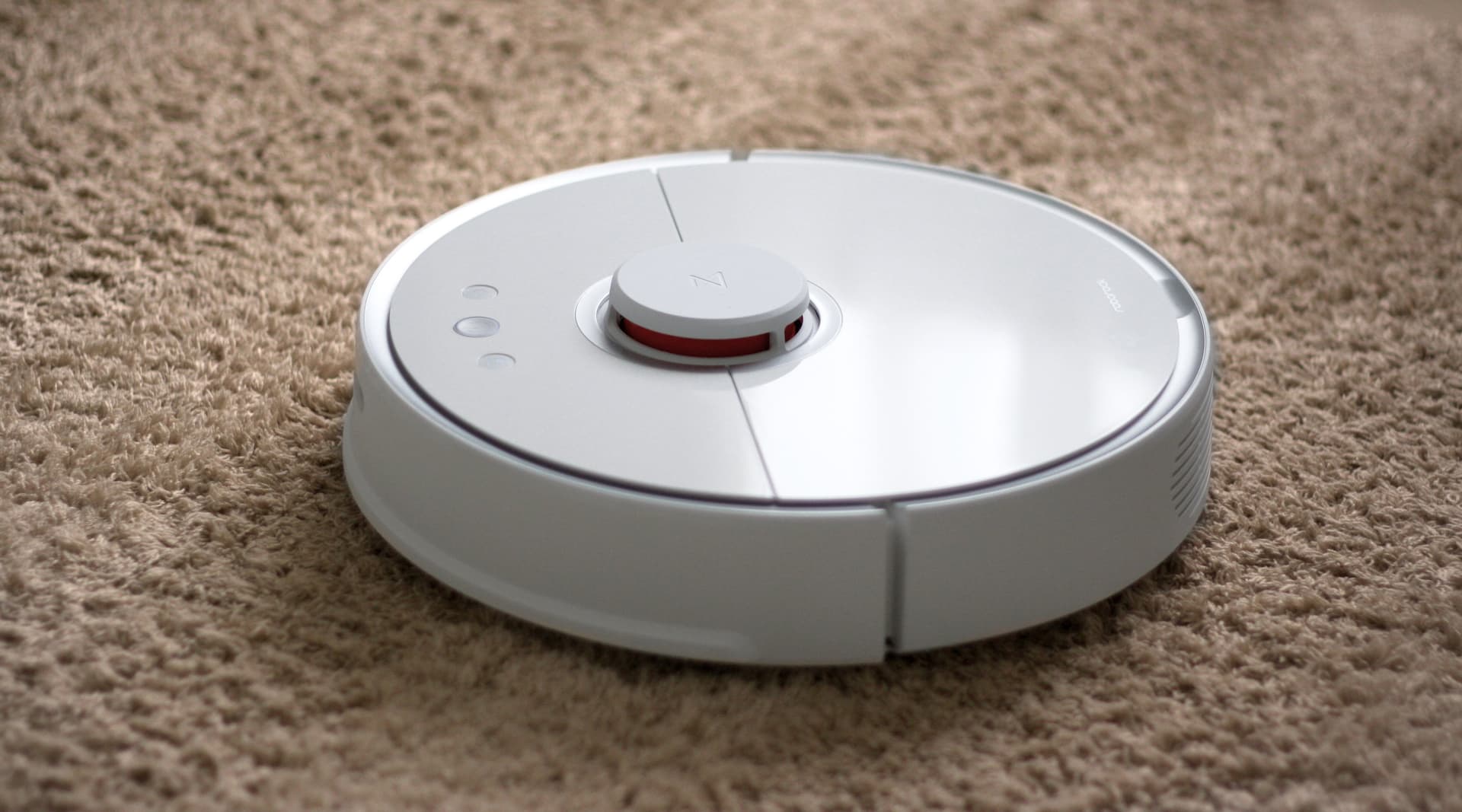

Auto-empty dock won't empty the robot's bin: how to tell what's wrong
Dock roars but the robot's bin stays full? A clogged air channel, a badly seated bag, a stalled suction motor — how to tell a home fix from a service job.

Contents
The robot drives onto the dock, you hear a loud roar for a couple of seconds — and the bin is just as full as it was. Or the dock hums, but nothing moves in the bin. This is one of the most common auto-empty dock faults we see on the bench, and it almost never starts with a burnt-out motor. It starts with a clog the owner can find without tools. Let's walk through the symptoms in order and mark where the home check ends and the service job begins.
First, one fact about Riga. Auto-empty docks clog most readily during the heating season: dry radiator air makes dust finer and stickier, so it packs into the air channel tighter than in summer. If you live in an older Riga block with unstable mains, note this too: a voltage dip at the exact moment the dock fires up its high-draw suction motor can cut the empty cycle off mid-way and create the impression of a failed motor when the electronics are fine.
The dock runs, but the robot's bin stays full
This is the starting point: suction is audible, the dock finishes its cycle, the indicator says all is well, yet the robot's dust bin stays full or nearly full. The first thing to establish is whether air flows through the system at all.
Do a simple check. With the robot parked on the dock and the empty cycle running, put your hand on the dock body next to the bag compartment. If you feel strong vibration and hear a clean, high suction note, the motor is working and the problem is somewhere on the path between the robot's bin and the bag. If the sound is dull, hollow, or the motor spins "free" with no sense of load, you most likely have an air blockage or a leak that prevents a pressure difference from forming.
The logic is simple: auto-emptying runs on a pressure difference. The dock creates a vacuum under the robot's bin, and atmospheric pressure pushes the debris up the channel into the bag. If there's a clog, an open gap, or a poorly seated bag anywhere in that chain, the pressure difference never forms and the debris stays in the bin. So the next steps are a process of elimination — we check each segment in turn.
A clog in the dock's air channel or the robot bin's port
This is the most common cause of all. The underside of the robot's bin has a port with a flap valve — the dock sucks debris out through it. That port and the dock's intake channel are exactly where hair, pet fur, and lint weave into a dense mat and block the passage.
Owner check, step by step:
- Remove the robot's dust bin and inspect the lower empty port. Often there's a hairball wound right there, around the edges of the flap. Hold it to the light — does the flap open and close freely?
- Check the flap's seal around the port. If it's stretched, gummed up with grime, or popped out of its groove, suction "leaks away" right here.
- Inspect the dock's intake port where the robot parks. There's a rectangular or round hatch leading up to the bag. With a torch, look deeper — packed hair at this bend is a typical sight.
- Clear both segments. The bin's flap port can be freed with narrow scissors or tweezers. The dock channel — with a long brush or a wire hook, carefully, so you don't damage the seal.
There's a clear DIY boundary here: cleaning the air channel and the bin port from the outside is a safe owner procedure. But if the clog sits deep inside the dock body, beyond where a hand or brush reaches, and requires splitting half the dock apart, that's a bench job — because a wrongly reassembled body loses its air-tightness and suction never recovers.
The dock bag — full, wrong, or badly seated
If the air path is clear but emptying still doesn't work, the next suspect is the bag. There are three separate problems here that are easy to confuse.
Swipe to see the full table
A few practical notes from the bench. A bag with a cardboard collar isn't just for storing debris — the collar's rubber seal closes off the channel, and the sensor lever behind it tells the dock the bag is in place. If the collar isn't pushed all the way in, a gap remains and suction leaks away even when the bag is nearly empty. The second typical mistake is a bag that looks similar but is from a different model: the opening doesn't fit, and either the sensor doesn't respond or the air goes the wrong way.
The dock makes a loud noise, but there's no suction
A loud, droning, or whistling sound with no real suction is a separate symptom with its own short list of causes. The motor spins — you can hear it — but the air isn't moving the debris. Three possible reasons:
- Airlock. The system is sealed so tightly — a full, compacted bag plus a clogged channel — that the motor spins against a "wall" and drones louder than usual while actually moving nothing. Clear the channel and replace the bag; the sound returns to normal.
- Torn or loose bag. If the bag has split or the collar isn't seated, air travels through the gap instead of through the robot's bin. The motor runs at full power, the sound is loud, but there's no suction in the bin, and dust often spills into the bag compartment.
- Worn impeller. If the channel is clear, the bag is intact and correctly seated, but the sound is metallic or droning with vibration, the suction motor's impeller may be cracked or worn. That's already a bench diagnosis.
A clear boundary: an airlock and a torn bag are owner-level — clear it, replace it, seat it correctly. But droning with vibration, once the bag and channel are ruled out as causes, points to the motor itself or its impeller, and that isn't opened up at home.
The robot doesn't seat flush against the dock
Sometimes the problem is neither the channel nor the bag, but the connection between the robot and the dock. For auto-emptying to work, the lower port on the robot's bin has to seat tightly against the dock's intake hatch — without that tight fit the vacuum leaks, and suction is weak or absent entirely.
What to check:
- The robot's position on the dock. Does the robot drive all the way in and settle in the right spot? If the charging contacts are dirty or the dock base is skewed, the robot can stop a few millimetres short and the ports won't line up.
- The seal around the bin port. It's the same rubber from the first step — if it's worn, hardened, or dirty, the tight fit is lost. The dry heating-season air in Riga flats speeds up the hardening of such rubber.
- Grime on the mating surface. A film of dust or a strand of hair between the robot and the dock is enough to break the air-tightness. Wipe both mating surfaces with a dry cloth.
- The dock base's footing. On an uneven or slippery floor the dock can rock at the moment of emptying. Set it against a solid wall on a level surface.
The owner can solve dirty contacts, dirty surfaces, and poor positioning. A cracked or stretched seal is a replaceable part — on simple models you can swap it yourself, but if the rubber is built into the bin mechanism together with the valve, bring the device to a service centre.
Dust spills back out of the dock
The opposite symptom: the dock seems to work, but a layer of dust appears around it on the floor, or the machine itself blows dust back into the room. That means air is escaping somewhere before it reaches the bag, or it's filtered wrongly afterward.
Typical causes by likelihood:
- Bag not in place or torn — air with dust goes into the bag compartment rather than into the bag. The most common reason.
- Dock exhaust filter clogged or missing. Many docks have a fine filter behind the bag that cleans the outgoing air. If it's clogged, the air seeks another path; if it was cleaned after washing and isn't dry, or simply wasn't refitted, dust goes into the room.
- Bag compartment lid leak. If the lid doesn't close tightly or its seal is damaged, some dusty air is forced out through the gap.
At the home level this almost always resolves: seat or replace the bag correctly, check and dry the exhaust filter (or replace it if it's single-use), close the lid until it clicks. If dust still spills after that and all the listed items are in order, there may be a crack in the dock body or channel itself, which needs to be inspected at a service centre.
When it's a dock motor or board repair
Most auto-empty problems stay at the owner level. But there's a point past which cleaning and bag replacement no longer help and the bench is needed. This table separates one from the other.
Swipe to see the full table
At the SATER service centre we open the dock body, test the suction motor under load, assess the impeller, and measure the control board's supply rails. A stalled motor can mean the motor itself, but the culprit is often a broken contact or a board supply stage — which is why diagnostics start with measurements, not parts swaps. We run a fast diagnostic at our service centre, before we change anything. For more on what we do with these devices generally, read the robot vacuum repair page, and for regular upkeep of the robot itself — not the dock — the robot vacuum maintenance guide is useful.
If you're unsure, bring the device in for diagnostics.
Repair path
Where to go next if this fault is repairable
Related SATER service, brand and fault pages help you understand the repair route and get the device into the right diagnostic flow.
Frequently Asked Questions
Need professional repair?
SATER service centre — Silmaču iela 6, Riga
SATER service — home electronics & appliance repair in Riga