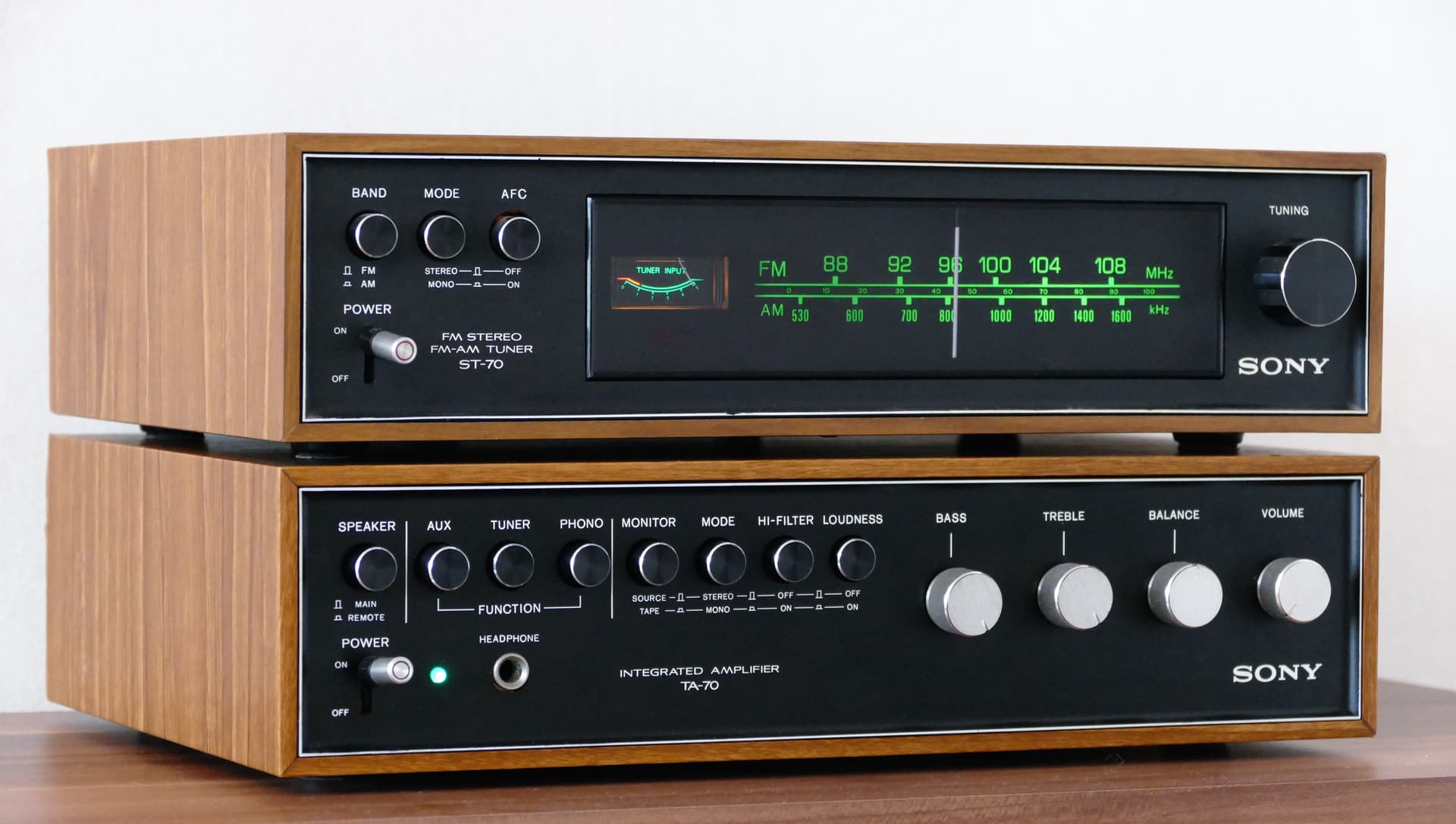

Vintage Audio Restoration — Bringing Soviet and European Equipment Back to Life
Vintage audio restoration: Radiotehnika, Vega, Elektronika, Revox, Grundig. Common age-related failures, restoration philosophy, where to find spare parts.
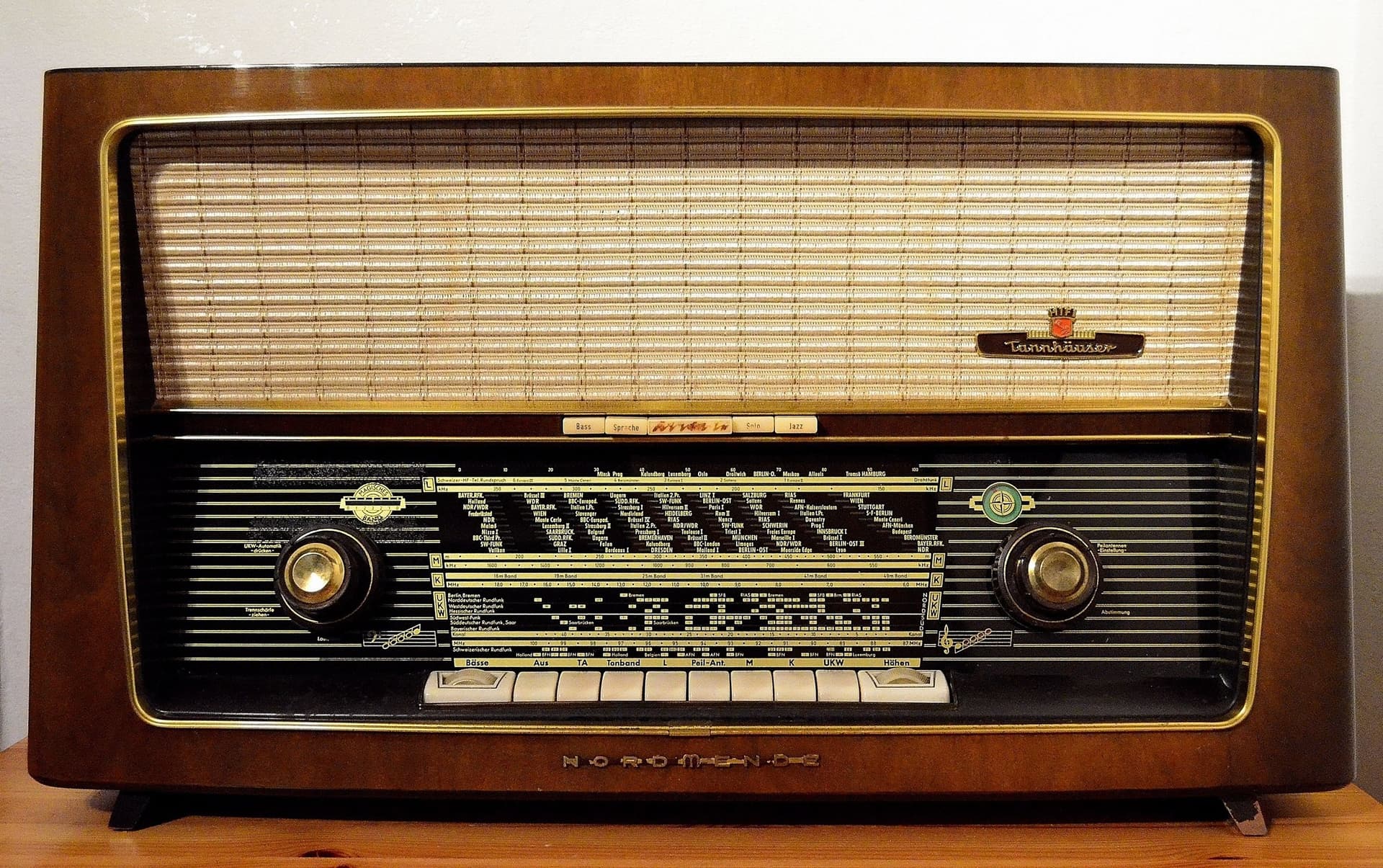
Contents
There's a particular world of enthusiasts who prefer the warm sound of a 1970s valve amplifier to any modern digital device. And it's not merely nostalgia — vintage audio equipment was built on different principles: generous engineering margins, discrete components, transformers with double the required power rating. This is equipment that was meant to be repaired, not discarded.
At the SATER service centre on Silmaču iela 6, vintage audio restoration isn't just a part of our work — it's part of our history. We're located in the building of the former Elektrons factory (in Soviet times, Workshop No. 2), which manufactured radio receivers and amplifiers. Many of the devices we restore today were created within these very walls. We've been operating since 1993 — over 30 years of continuous experience.
Soviet Audio Legends
Radiotehnika
The Riga-based Radiotehnika plant (VEF Radiotehnika RRR) is our local pride. The factory was right here in Riga, producing world-class audio equipment for the Soviet market.
Legendary models:
- Radiotehnika У-101 / УП-001 — preamplifier and power amplifier. Modular system, honest 20W per channel (RMS). Quality components, excellent circuit design.
- Radiotehnika У-7111 — integrated amplifier, 50W per channel.
- Radiotehnika S-90 — loudspeakers that became the standard of Soviet Hi-Fi. Three-way, with a 10-inch bass driver.
- Radiotehnika EP-101 — belt-drive vinyl turntable.
Typical problems after 30-40 years:
- Dried-out electrolytic capacitors — capacitance loss, elevated ESR, 50 Hz hum in the speakers
- Oxidised switches and potentiometers — crackling, sound cutting out when turning the volume
- Transistor degradation — biasing shifts, distortion
- S-90 speaker surrounds — dried, cracked, lost elasticity
Vega (Berdsk Radio Factory)
A Siberian brand known for high quality:
- Vega 50У-122С — 50W/channel amplifier, one of the finest Soviet amplifiers
- Vega ЭП-110 — turntable with electronic speed stabilisation
Elektronika
- Elektronika 50У-017С — laboratory-grade amplifier
- Elektronika ТА1-003 — three-head cassette deck
Other Soviet Brands
- Brig 001 — legendary amplifier, 60W/channel, Shurin's design
- Odissey 010 — integrated amplifier, 50W/channel
- Korvet 200У-068С — power amplifier, 100W/channel
European Classics
Revox (Switzerland)
- Revox B77 — reel-to-reel tape recorder. Swiss quality, massive construction, studio-grade recording.
- Revox B225 — one of the earliest CD players, featuring the Philips CDM-1 transport.
Typical problems: rubber pinch rollers and belts deteriorating (hardening, stretching), electrolytic capacitor degradation in the power supply, contact corrosion on switches.
Grundig (Germany)
- Grundig Fine Arts series — premium amplifiers and CD players
- Grundig V2000 — power amplifier, 2×100W
Philips (Netherlands)
- Philips CD104 — one of the first production CD players (1984), with a light, "airy" sound
- Philips co-created the CD format with Sony — their early CD players have become collectors' items
Tandberg (Norway)
- Tandberg TR 2080 — receiver with FM tuner. Scandinavian design, excellent circuit engineering.
What Makes Vintage Gear Special
Discrete Components
Modern amplifiers are built on integrated circuits — the entire amplifier on a single chip. Vintage equipment uses discrete components: individual transistors, resistors, capacitors. Each can be measured, tested, and replaced.
For a repair technician, this is ideal: a fault can be localised to a specific component costing pennies.
Over-Engineered Transformers
Soviet and European amplifiers of the 1970s-80s contain massive mains transformers — often with double the required power rating. A 50W amplifier's transformer could handle 100-120W. This ensures stable supply, low hum, and remarkable longevity. Transformers last decades.
Metal Housings
A heavy metal case isn't merely aesthetic. Metal shields against electromagnetic interference (EMI), acts as a heatsink, and provides mechanical strength.
Typical Age-Related Failures
Electrolytic Capacitors (Most Common)
Electrolytic capacitors have a limited lifespan: 10-20 years in ideal conditions. After 30-40 years, they've guaranteed degraded.
Symptoms: 50/100 Hz hum in speakers, unstable operation, overheating, distortion on low frequencies.
Solution: complete replacement of all electrolytic capacitors (recapping). We use quality modern capacitors (Nichicon, Panasonic, Elna) with specifications at least as good as the originals.
Contact Oxidation
Over decades, contact surfaces develop an oxide film:
- Potentiometers — crackling when turning, sound dropout
- Input selectors — one channel doesn't work, or sound "floats"
- Relays — contacts burn, sound drops out
Solution: cleaning with specialist contact cleaner (DeoxIT) or replacement.
Rubber Parts
After 30-40 years, rubber loses its elasticity:
- Turntable and deck belts — stretch, slip, speed "drifts"
- Pinch rollers in cassette decks — harden, stop gripping the tape
- Speaker surrounds — dry out, crack, tear (especially foam surrounds)
Solution: replacement with new parts. Belts and rollers are available for most models. Speaker surrounds — re-gluing with new rubber surrounds (rubber lasts longer than foam).
Restoration vs Modification
Purists (original restoration): replace only faulty components with identical-specification parts, preserve original circuit design. Aim: return the device to factory condition.
Modifiers: replace all capacitors with "audiophile" types (Elna Silmic, Nichicon MUSE), swap op-amps, modify circuits. Aim: make it "better than new."
Our approach at SATER: we follow the customer's wishes but recommend a middle path. Replacing all electrolytic capacitors is essential (not a modification — the old ones are dead). We keep the original circuit — it was designed by engineers who knew what they were doing. We fit quality modern components — they're objectively better than what was available in the 1980s.
Where to Find Spare Parts
- Specialist shops — eBay (Vintage Electronics section), HiFi Engine (documentation), Willmann HiFi (Revox, Grundig parts)
- NOS components (New Old Stock) — new but manufactured decades ago
- 3D printing — plastic gears, covers, knobs can be printed from drawings
- Donor units — sometimes the only source of a rare part
- Professional electronic component suppliers (TME, Mouser, Farnell) — for standard components
Is Vintage Worth the Candle?
A common question: "Does a Soviet amplifier for €100 sound better than a new one for €100?"
Honest answer: yes, provided the vintage unit has been properly restored. A 1980s amplifier for €100 (properly restored) delivers a class comparable to a new amplifier at €300-500. The reason: modern budget amplifiers economise on everything (plastic case, switch-mode PSU, IC-based amplifier stage), whilst vintage equipment is built on full discrete components with a heavy linear transformer.
However: if the budget stretches to a new amplifier at €500+, it will be more convenient (remote, Bluetooth, HDMI), more reliable (new components), and quieter (less hum). Vintage is a choice of the heart, not the wallet.
Repair path
Where to go next if this fault is repairable
Related SATER service, brand and fault pages help you understand the repair route and get the device into the right diagnostic flow.
Frequently Asked Questions
Need professional repair?
SATER service centre — Silmaču iela 6, Riga
SATER service — home electronics & appliance repair in Riga