
Electronics Recycling in Riga — Where and How (WEEE Directive)
Where to recycle old electronics in Riga: free drop-off points, WEEE directive, the 1:1 rule in shops, battery recycling and repairing before recycling.
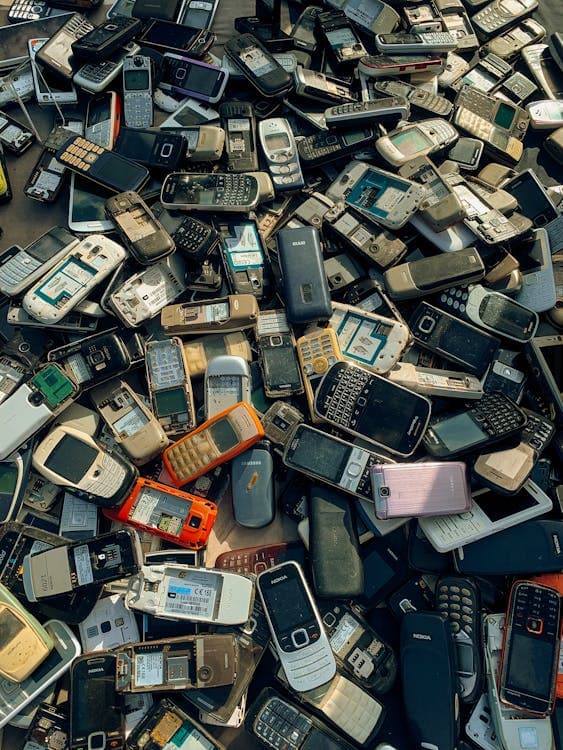
Leo Arslan / Pexels
Contents
Everyone accumulates electronics that are no longer needed: old TVs, broken vacuum cleaners, stacks of chargers, "dead" batteries. What to do with it all? Putting it in the bin is illegal and environmentally hazardous. But navigating the recycling rules isn't straightforward.
When a device is no longer worth repairing, the next question is practical: where should it go now? This article is a guide to electronics recycling in Riga: what can go into collection points, what needs special handling, and what to do before you hand over a device with personal data.
What Is WEEE and Why It Matters
The WEEE Directive
WEEE (Waste Electrical and Electronic Equipment) — EU Directive 2012/19/EU governing electronic waste. In Latvia, it's implemented through national regulations on the management of electrical and electronic equipment waste.
Key principles:
- Producer pays — recycling costs are included in the product price (via an environmental levy)
- Free collection — consumers can dispose of old electronics free of charge
- Separate collection — electronics are collected separately from household waste
- Responsible recycling — extraction of valuable materials, safe neutralisation of hazardous substances
Why You Can't Put Electronics in General Waste
Electronics contain dozens of hazardous substances:
Swipe to see the full table
Where to Recycle Electronics in Riga
1. Separate Collection Sites (EKO punkti)
Riga operates a network of waste collection sites. Collection is free for Riga residents.
- Getliņi EKO — Latvia's largest landfill facility. Accepts all electronics, including bulky items.
- SIA "Pilsētas līnijas" sites — several locations across Riga's districts.
What they accept: TVs, monitors, computers, printers, microwaves, vacuum cleaners, power tools, household appliances, cables, chargers.
2. Shops — The "1 for 1" Rule
Under Latvian law, large electronics retailers must accept old electronics free of charge when you purchase an equivalent new product.
How it works: buy a new TV at Euronics — you can leave the old one at the shop. The rule applies to shops with a sales floor exceeding 400 m².
Without a purchase: some major chains (Maxima, Rimi) have containers for small electronics (phones, chargers, batteries) that can be dropped off without buying anything.
3. Small Electronics and Battery Containers
Many supermarkets and shopping centres have dedicated containers:
- Batteries and accumulators — green containers at Rimi, Maxima, Lidl, Euronics
- Small electronics (phones, earphones, chargers) — containers in shopping centres
- Light bulbs (fluorescent, LED) — separate containers
Batteries — Separately!
This is critically important: batteries and accumulators must not be disposed of with other electronics.
Why Separately
- Lithium-ion batteries are a fire hazard. At waste processing plants, lithium batteries regularly cause fires. Mechanical damage during sorting → short circuit → thermal runaway → fire.
- NiCd batteries contain cadmium (carcinogen)
Where to Recycle
- Green battery containers in supermarkets (Rimi, Maxima, Lidl)
- Electronics shops (Euronics, RD Electronics, 1a.lv)
- EKO collection sites
Tip: if a battery is swollen, don't drop it into a container with other batteries. Bring it separately, alerting the attendant.
Repair Before Recycling
Before sending a device for recycling — consider: could it be repaired?
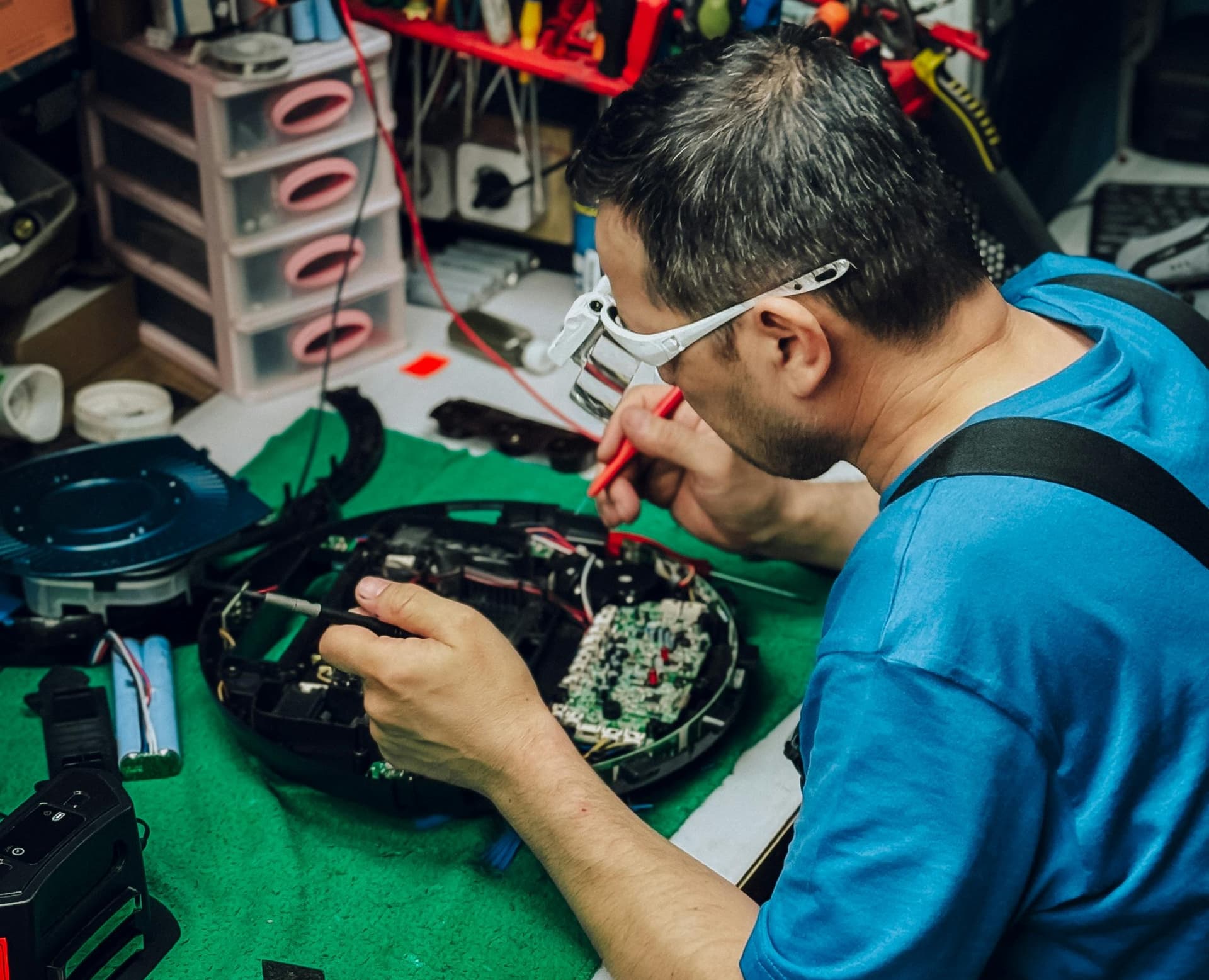
At the SATER service centre, we frequently see devices their owners consider "dead" that are actually:
- "Won't turn on" TV — often a power supply issue (a capacitor costing €2-5)
- "Won't hold charge" vacuum — battery replacement is considerably cheaper than a new vacuum
- "Won't heat" microwave — may need a fuse or capacitor replacement
- "Dead" power tool — often the problem is motor brushes (a consumable part)
Rule: bring the device for diagnosis before discarding it. If repair costs less than 50% of a new device's price, repair makes sense.
Environmental Impact
Numbers that give pause for thought:
- Latvia generates approximately 10-12 kg of electronic waste per person per year
- Only 40% of electronic waste in the EU is collected and recycled properly
- Manufacturing a new smartphone generates about 70 kg of CO₂. Extending its life by 1 year reduces the environmental footprint by 25-30%
- One repaired TV = 200-300 kg CO₂ saved compared to manufacturing a new one
Repair path
Where to go next if this fault is repairable
Related SATER service, brand and fault pages help you understand the repair route and get the device into the right diagnostic flow.
Frequently Asked Questions
Need professional repair?
SATER service centre — Silmaču iela 6, Riga
SATER service — home electronics & appliance repair in Riga