
Cordless Vacuum Battery Dying Fast — Repair or Replace?
Why your cordless vacuum battery dies quickly: battery degradation science, OEM vs aftermarket batteries, custom battery pack assembly — causes explained.
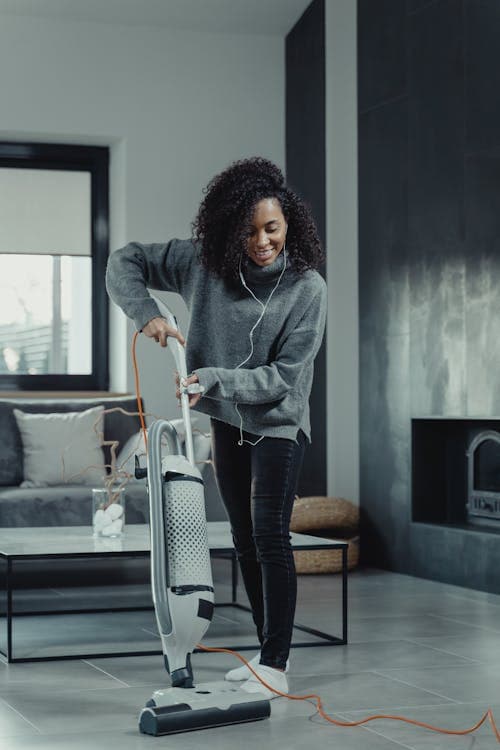
Tima Miroshnichenko / Pexels
Contents
When you first bought your cordless vacuum, it ran for 30-60 minutes on a single charge. Now it manages 5-10 minutes before switching off mid-clean, flashing red and demanding to be recharged. Sound familiar?
This is an inevitable reality for any device powered by a lithium-ion battery. The battery is a consumable, and sooner or later it degrades. The question is when to replace it — and whether to choose an original battery, a compatible alternative, or commission a custom-built battery pack.
How Lithium-Ion Batteries Work and Age
The Basics
Lithium-ion (Li-ion) batteries are the standard in modern cordless vacuums. They consist of several cells (usually in the 18650 or 21700 form factor) connected in series and parallel to achieve the required voltage and capacity. They're managed by a BMS (Battery Management System) — a controller board that monitors each cell's voltage, temperature, and current.
Why Batteries Degrade
Every charge-discharge cycle causes irreversible chemical changes inside the cells:
- SEI layer growth. A film forms on the anode (negative electrode) that thickens with each cycle. It consumes active lithium and increases internal resistance.
- Cathode degradation. The crystal structure of the cathode material gradually breaks down, reducing the amount of lithium available for exchange.
- Electrolyte loss. The liquid electrolyte slowly decomposes, particularly at elevated temperatures.
- Lithium plating. During rapid charging or at low temperatures, lithium deposits on the anode as a metallic film instead of intercalating into the graphite structure.
Typical Lifespan
Most lithium-ion vacuum batteries are rated for 300-500 full cycles (0% to 100%). After that, capacity drops to 70-80% of the original. In practice, this means:
- With daily use: 1.5-2.5 years before noticeable degradation.
- With use 2-3 times per week: 3-4 years.
- With infrequent use: 3-5 years — though calendar ageing occurs regardless; batteries degrade even sitting on a shelf.
Signs Your Battery Is Dying
Here's how to tell your vacuum battery is on its way out:
- Run time has dropped sharply. Instead of 30-40 minutes, you get 5-10. This is the primary symptom.
- Pulsing at full charge. The battery can't deliver a stable current — the vacuum starts and immediately cuts out.
- Very fast charging. If the vacuum charges in 1-2 hours instead of the usual 3-5, capacity has dropped significantly (there's simply less to charge).
- Overheating during use or charging. A worn battery runs hotter than normal.
- Swollen battery. If the battery housing is distorted or bulging, the cells have swollen. This is dangerous. Stop using the vacuum immediately.
- Vacuum won't switch on. The battery has hit zero — the BMS controller has locked out operation.
OEM vs Aftermarket Batteries: What to Choose
Original (OEM) Batteries
These are batteries from the vacuum manufacturer — Dyson, Bosch, Samsung, etc. They're guaranteed compatible, use vetted cells, and include the original BMS controller.
Pros:
- Guaranteed compatibility.
- Quality, vetted Li-ion cells.
- Correct BMS interaction with the vacuum's electronics.
Cons:
- High price — an original Dyson battery can cost 40-60% of a new vacuum.
- Not always in stock, especially for older models.
Compatible (Aftermarket) Batteries
Batteries from third-party manufacturers, designed for specific vacuum models. Quality varies enormously — from decent alternatives to outright rubbish.
Pros:
- Significantly cheaper than OEM (2-4 times less).
- Wide selection for popular models.
- Sometimes — higher capacity than the original.
Cons:
- Unpredictable cell quality. Cheap aftermarket batteries often use cells of unknown origin with exaggerated specifications.
- The BMS may be simplified — lacking proper overcharge, over-discharge, and overheat protection.
- Risk of incompatibility with the vacuum's electronics.
- Lifespan can be 2-3 times shorter than OEM.
What to Look for When Buying an Aftermarket Battery
- Cell type and brand. Look for batteries built on reputable, branded Li-ion cells rather than "noname" cells.
- Actual capacity. If an aftermarket battery costs a quarter of the OEM price and claims double the capacity — that's fiction. The real capacity of cheap cells can be 2-3 times below what's stated.
- BMS quality. A good BMS board provides cell balancing, overcharge protection, over-discharge protection, short-circuit protection, and thermal cutoff.
- Reviews. Read genuine reviews — not on the seller's own site, but on independent platforms.
Custom Battery Pack Assembly at SATER
Instead of buying a ready-made battery, we can also build a pack to order for your specific vacuum:
How It Works
- Diagnosis. We inspect the vacuum and determine the required battery specifications: voltage, capacity, form factor, connector type.
- Cell selection. We use verified, branded Li-ion cells from leading manufacturers — no "noname" cells, only genuine cells with confirmed specifications.
- Assembly and welding. Cells are joined by spot welding (not soldering — soldering overheats cells and reduces their lifespan).
- BMS installation. We fit a quality controller board with cell balancing and full protection.
- Testing. We test the battery under load — capacity, current delivery, BMS operation.
- Fitting. We install the finished pack in the vacuum and verify all systems.
Brands We Cover for Battery Replacement and Assembly
Dyson
The most popular brand at our service centre. We work with every model from V6 through to V15. Dyson batteries use 18650 or 21700 cells depending on the series. Typical capacity ranges from 2,100 mAh (V6) to 4,000 mAh (V15).
Bosch
The Unlimited and Athlet series use PowerForAll 18 V or 25.2 V batteries.
Samsung
The Jet 60, 70, 75, and 90 series use proprietary battery packs.
Xiaomi
Popular Dreame and Mi Vacuum models — compact batteries with high energy density.
Philips
SpeedPro and SpeedPro Max series. Batteries with non-standard connectors — we source compatible solutions.
Repair vs Replace: When to Choose What
Swipe to see the full table
How to Extend Your Battery's Life
- Don't fully discharge. Li-ion batteries dislike deep discharge. Try to charge at 20-30% remaining.
- Don't overheat. Don't leave the vacuum in the sun, near a radiator, or in an unheated space during winter. Ideal storage temperature is 15-25°C.
- Don't store it flat. If you won't use the vacuum for several weeks, charge it to 40-60% and disconnect from the charger.
- Use it regularly. A battery that sits idle degrades faster than one in active use.
- Don't overuse Boost mode. Maximum power creates maximum load on the battery and accelerates wear.
About Us
Cordless vacuum runtime problems are not always solved by buying a new battery. We test the cells, BMS, charger, motor current draw, and blocked airflow, because a worn motor or clogged filter can drain even a healthy pack. If your robot vacuum shows the same symptoms, our robot vacuum repair in Riga service covers battery rebuilds for those models too.
Repair path
Where to go next if this fault is repairable
Related SATER service, brand and fault pages help you understand the repair route and get the device into the right diagnostic flow.
Frequently Asked Questions
Need professional repair?
SATER service centre — Silmaču iela 6, Riga
SATER service — home electronics & appliance repair in Riga